Applied to existing businesses, properties, products, services, or experiences.
Define the Value Proposition
Identify the core value behind an idea — what it offers, who it is for, and why it deserves to exist.
Shape the Business Model
Align the concept with revenue logic, user behavior, operational structure, and market viability.
Reposition the Offering
Reveal new relevance in an existing product, space, service, or company by reframing how it is understood and experienced.
Translate Strategy Into Design Direction
Convert strategic intent into a design brief, creative direction, customer journey, and path to execution.
Launch New Ventures
Self-originated concepts developed by Think Atelier and prepared for the right partner.
Redefine Market Boundaries
Expand or reframe an existing business by identifying new audiences, behaviors, categories, or value spaces.
Build New Ventures
Create new concepts, platforms, products, services, or experiences from the ground up.
Form Strategic Partnerships
Connect companies, talent, capital, platforms, or capabilities to unlock opportunities that cannot be built alone.
We developed TAOS, the Think Atelier Operating System, as a strategic toolset that combines selected frameworks, methods, and principles from Blue Ocean strategy, design thinking, and service design, governed by our aesthetic imperative, to identify new value systems and give them form through products, spaces, experiences, and new ventures.
Think Atelier Ventures
We see what the market misses, build an actionable solution, and develop it to launch-ready stage. These are self-originated ventures — not concepts, not proposals — fully developed by Think Atelier and focused across three distinct fields: real estate, product, and strategic initiatives.
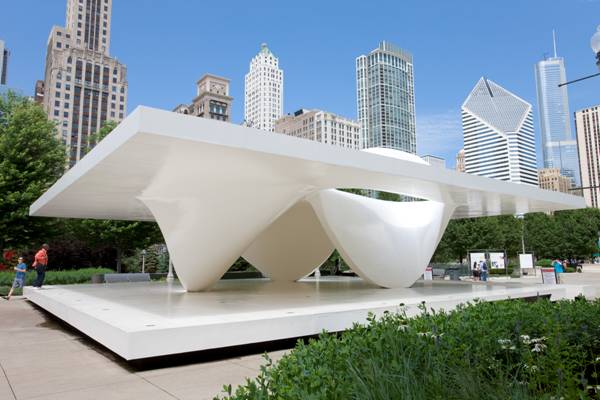
Chicago Architecture Biennial
The first architecture biennial in U.S. history, the inaugural 2015 edition transformed architecture into a citywide cultural platform and drew over 500,000 visitors.
REAL ESTATE
Compact Living
Status: Complete
Most compact housing forces a trade-off — smaller footprint means lower quality of life. Developers have no proven model that solves affordability, density, and livability at once.
A complete real estate concept that delivers higher quality of life within smaller footprints — ready to deploy in markets where all three must be solved together.
Adults in transition — post-divorce, post-retirement, post-kids — have no housing designed for them. The market offers only conventional multifamily or senior-adjacent options, neither of which fits.
A residential concept built around independence, quality of life, and right-sized living — a more intelligent alternative for a demographic the market has ignored.
Student housing is one of the least spatially optimized asset classes. Units are poorly conceived, value per square foot is low, and operators accept underperformance as a given.
A spatial and business model that raises living performance, tightens unit logic, and increases value per square foot — turning a low-expectation asset class into a high-performance one.
Developers, lenders, and appraisers value space almost entirely by square footage — a metric that says nothing about how well a space actually performs or what it is truly worth.
A SaaS platform that quantifies spatial performance beyond square footage — giving real estate, hospitality, and workplace teams a new language for value.